




George P. Putnam Biography: Publisher, Explorer, and the Man Behind Amelia Earhart’s Legacy
Early Life and Family Legacy
George P. Putnam was born into one of the most influential publishing families in the United States. His family founded the historic G. P. Putnam’s Sons publishing house, which played a major role in shaping American literary culture. Growing up in Rye, New York, he was surrounded by books, editors, and intellectual discussions that naturally shaped his future identity.
From the beginning, he was exposed to both business discipline and creative storytelling. The Putnam household valued literature, communication, and entrepreneurial thinking, which helped him develop a strong understanding of the publishing world even before formally entering it. This environment created a foundation for his later success in media and promotion.
His early life also reflected the expectations of a legacy family, where continuing the publishing tradition was both an opportunity and responsibility. This heritage influenced his ambition to expand beyond traditional publishing and explore broader fields such as journalism, exploration, and public communication.
Education and Early Influences
George P. Putnam received his education in prestigious institutions, including Harvard University and later studies at the University of California, Berkeley. Although his academic journey was interrupted due to health issues, his exposure to higher education significantly shaped his thinking and communication style.
During his studies, he developed a strong interest in writing, geography, and public affairs. These subjects later became central to his career as he moved between journalism, publishing, and exploration. His education also helped him understand how information could influence public opinion.
Beyond formal education, his most important influences came from real-world exposure to publishing operations and editorial work. These experiences gave him practical knowledge that would later define his success in building public narratives and managing media attention.
Start in Publishing Career
George P. Putnam began his professional journey within his family’s publishing business, where he worked in editorial and production roles. This early experience allowed him to understand how books were developed, marketed, and distributed to readers.
He quickly demonstrated strong communication skills and an ability to recognize market trends in literature. His early career was marked by hands-on involvement in book editing and promotion, giving him a deeper understanding of how storytelling connects with audiences.
As he gained experience, he began to develop his own identity within the publishing industry. Rather than simply continuing tradition, he started exploring new ways to promote authors and ideas, setting the stage for his later influence in media and public relations.
Journalism and Political Role in Oregon
In addition to publishing, George P. Putnam worked in journalism in Oregon, where he served as a newspaper editor. His work in the press gave him firsthand experience in shaping public opinion through news and editorial content.
During his time in Oregon, he also entered public service and became mayor of Bend, Oregon. This unusual combination of journalism and politics strengthened his leadership abilities and expanded his understanding of public communication at both local and national levels.
His time in Oregon played a key role in shaping his personality as a communicator and strategist. It also demonstrated his versatility, showing that he was capable of operating successfully in both media and governance environments.
Military Service and Exploration Expeditions
During World War I, George P. Putnam served in the United States Army field artillery. His military service introduced discipline and structure into his already diverse career path and gave him a broader global perspective.
After the war, he became involved in scientific exploration, particularly Arctic expeditions. He worked with major institutions to organize and lead research missions in remote regions such as Greenland and Baffin Island. These expeditions were focused on geography, wildlife, and environmental study.
His exploration work helped him gain recognition beyond publishing. It positioned him as an adventurer and field researcher, strengthening his public image and expanding his professional reach into scientific and geographic communities.
Rise in Publishing and Media Promotion
As his career progressed, George P. Putnam became a prominent figure in American publishing and media promotion. He developed a reputation for his ability to turn books and individuals into widely recognized public figures.
He understood early how media attention could shape public perception. By combining storytelling with strategic publicity, he helped authors and explorers gain national and international recognition. His work contributed to the evolution of modern public relations practices.
This period marked his transformation from traditional publisher to influential media strategist. His ability to manage public narratives made him one of the most effective promoters of his time, especially in the fields of exploration and aviation.
Relationship with Amelia Earhart
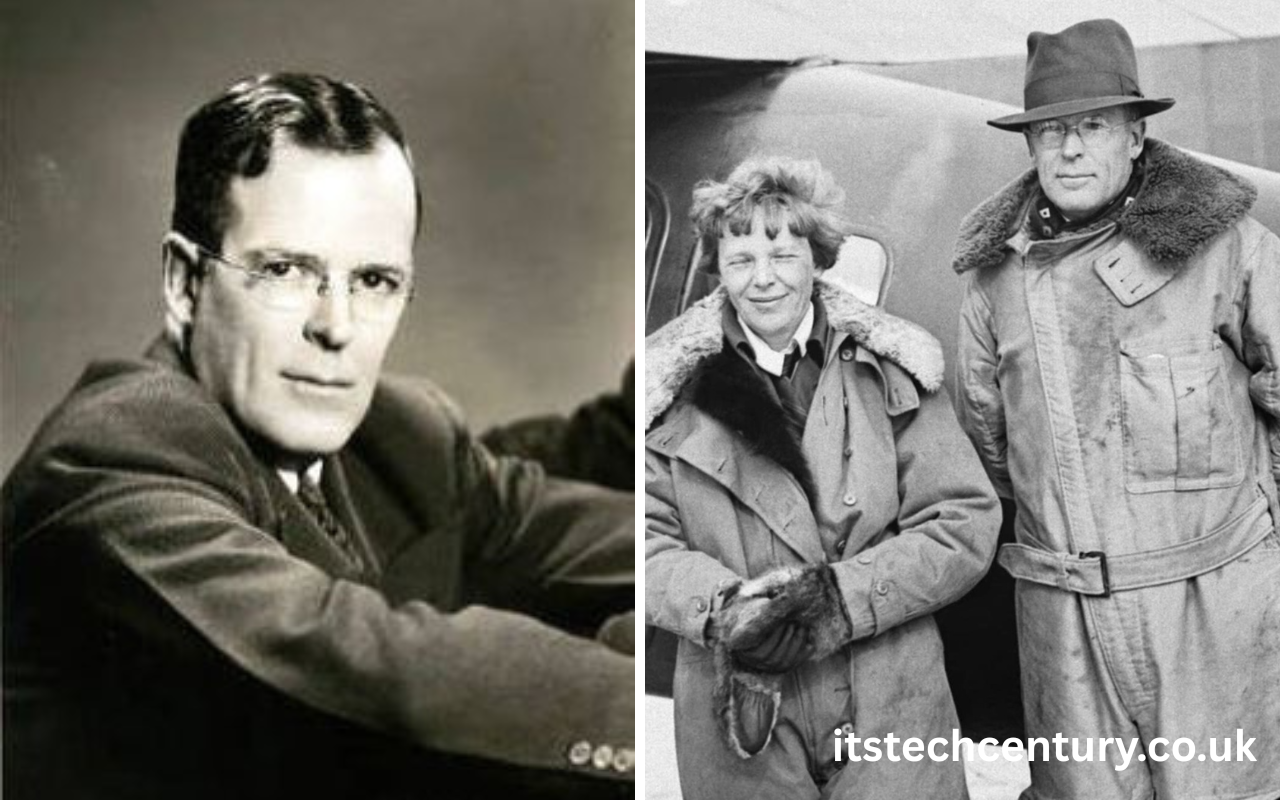
One of the most significant chapters in George P. Putnam’s life was his relationship with Amelia Earhart. He first worked with her professionally, helping to manage her publicity and public image as she rose to international fame.
Putnam played a major role in organizing her lecture tours, book deals, and media appearances. His promotional strategies helped establish her as one of the most iconic aviators in history. Their professional collaboration eventually developed into a personal relationship.
The two later married, forming a partnership that blended business, adventure, and public life. Their relationship remains a key part of aviation history, especially in understanding how Earhart’s global image was shaped and maintained.
Literary Works and Writings
George P. Putnam was also a writer who contributed several books throughout his life. His works covered exploration, geography, personal memoirs, and aviation history, reflecting his wide-ranging interests and experiences.
His writing style was straightforward and informative, influenced by his background in journalism and publishing. He focused on factual storytelling, often drawing from his personal experiences in expeditions and media work.
Through his books, he documented not only his own journey but also important cultural and scientific developments of his time. His literary contributions continue to serve as historical records of early 20th-century exploration and media culture.
Later Life and Enduring Legacy
In his later years, George P. Putnam continued working in publishing and business ventures, including managing resort properties in California. He remained active in media and public communication even after stepping back from major promotional roles.
After the disappearance of Amelia Earhart in 1937, he devoted significant effort to preserving her legacy and managing public attention surrounding her story. This period deeply influenced how history remembers both Earhart and Putnam.
George P. Putnam passed away in 1950, leaving behind a complex and influential legacy. He is remembered as a publisher, explorer, and media strategist who helped shape modern publicity and storytelling practices.
READ MORE: Fathia Youssouf Biography: Career, Early Life, and Rise of a French Cinema Star
Impact on Modern Media and Public Relations
George P. Putnam’s career helped lay the foundation for modern public relations and media promotion. His ability to shape public narratives demonstrated how communication could be strategically used to build fame and influence.
His methods influenced how publishers, marketers, and media professionals approach storytelling and branding. By merging publishing with promotion, he helped redefine how individuals and ideas reach global audiences.
Today, his legacy is seen in the way public figures are managed and presented in media. His work continues to serve as an early example of how strategic communication can transform careers and cultural impact.