



833 Area Code: Everything You Need to Know About Toll-Free Numbers, Calls, and Business Benefits
The 833 area code has become increasingly common as businesses, organizations, and customer support teams continue to expand their communication channels. If you’ve received a call from an 833 number or are considering getting one for your business, understanding how this toll-free area code works is essential.
Unlike geographic area codes tied to a specific city or state, the 833 area code belongs to the family of toll-free numbers used throughout the United States, Canada, and other countries participating in the North American Numbering Plan. These numbers make it easier for customers to contact businesses without paying long-distance charges while providing companies with a professional and recognizable point of contact.
What Is the 833 Area Code?
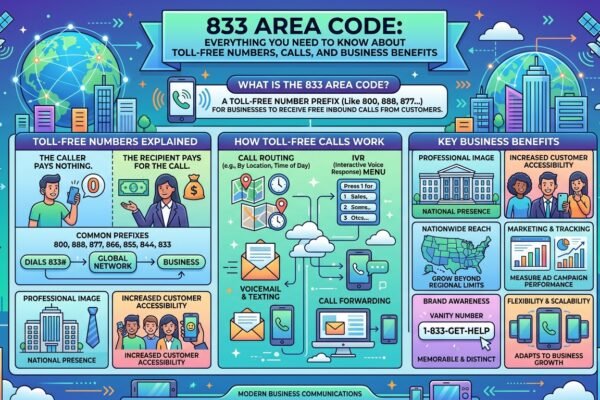
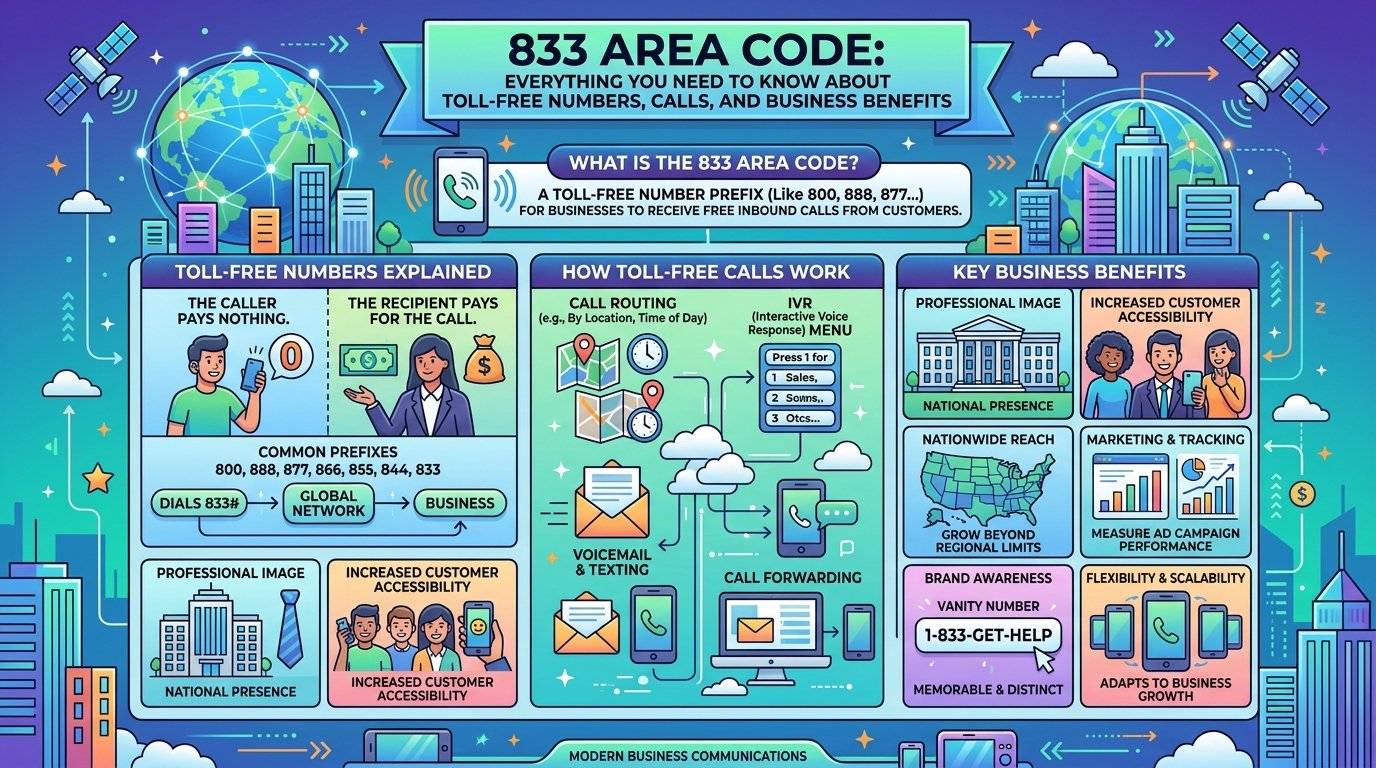
The 833 area code is a toll-free area code introduced to meet the growing demand for toll-free telephone numbers. It functions similarly to other well-known toll-free prefixes such as 800, 888, 877, 866, 855, and 844. Calls placed to these numbers are generally free for the caller, with the receiving organization paying the associated charges.
Because it is toll-free, an 833 number does not indicate the physical location of the caller or business. A company based in California, Texas, Florida, or New York can all use the same 833 number, making it a flexible communication solution for organizations serving customers nationwide.
How Toll-Free Numbers Work
When someone dials a toll-free number, the call is routed through telecommunications providers rather than being linked to a geographic region. This allows businesses to direct incoming calls to customer service teams, sales departments, remote employees, or multiple offices without changing the published phone number.
Modern cloud phone systems make toll-free numbers even more versatile. Businesses can configure call forwarding, voicemail, interactive voice response (IVR), call recording, analytics, and routing rules that improve customer service while maintaining a consistent brand identity.
Why the 833 Area Code Was Introduced
Demand for toll-free numbers has steadily increased as businesses moved toward national and digital operations. Existing prefixes gradually became less available, leading regulators to introduce additional toll-free options, including the 833 area code, to ensure an adequate supply of new numbers.
The introduction of new toll-free prefixes helps businesses secure memorable phone numbers without competing for a shrinking inventory. This expansion also supports startups, nonprofits, healthcare providers, government agencies, and enterprises that rely on accessible customer communication.
Who Uses the 833 Area Code?
Many different organizations use 833 numbers. National retailers, financial institutions, insurance companies, technology providers, healthcare organizations, logistics companies, educational institutions, and customer support centers frequently rely on toll-free numbers to simplify communication with customers.
Small businesses also benefit from adopting an 833 number. A local company can project a larger, more professional image while remaining accessible to customers outside its immediate service area. This flexibility is especially valuable for businesses operating online or serving multiple regions.
Is the 833 Area Code Legitimate?
One of the most common questions people ask is whether an 833 area code call is legitimate. The answer is yes. The area code itself is completely legitimate and is officially designated as a toll-free prefix under the North American Numbering Plan.
However, the legitimacy of the area code does not automatically guarantee that every caller is trustworthy. Just like local numbers, toll-free numbers can sometimes be used by scammers attempting to impersonate legitimate businesses. This makes it important to evaluate the caller rather than judging the number solely by its prefix.
How to Verify an 833 Caller
If you receive an unexpected call from an 833 number, avoid immediately sharing personal or financial information. Instead, ask for the caller’s company name, department, and reason for contacting you before making any decisions.
A good practice is to independently locate the organization’s official contact information and call back using the number listed on its website. This simple verification step significantly reduces the risk of becoming a victim of impersonation or phishing scams.
Common Reasons You May Receive an 833 Call
Businesses use toll-free numbers for many legitimate purposes. Customer service follow-ups, appointment reminders, order confirmations, technical support, warranty assistance, billing inquiries, and account notifications are among the most common reasons consumers receive these calls.
Marketing campaigns may also originate from 833 numbers, although reputable companies typically provide clear identification and offer an easy way to opt out of future promotional communications if requested.
Benefits for Businesses
The 833 area code offers businesses a professional image that inspires confidence among customers. Toll-free numbers are easy to recognize and often signal that an organization has dedicated customer support resources available.
In addition to branding advantages, businesses gain operational flexibility. Calls can be routed to remote employees, outsourced call centers, or regional offices without requiring customers to remember multiple phone numbers. This centralized approach improves both efficiency and customer experience.
Benefits for Customers
Customers appreciate toll-free numbers because they provide a convenient way to reach companies without worrying about long-distance charges. Although unlimited calling plans are now common, toll-free numbers continue to represent accessibility and customer-first service.
Another advantage is consistency. Whether customers relocate or travel, they can continue using the same business contact number without needing to search for regional offices or updated contact information.
Comparison of Toll-Free Area Codes
| Toll-Free Prefix | Geographic Location | Caller Pays? | Typical Users | Primary Purpose |
|---|---|---|---|---|
| 800 | None | No | Large enterprises | Customer service |
| 888 | None | No | National businesses | Sales and support |
| 877 | None | No | Service providers | Customer assistance |
| 866 | None | No | Various organizations | Nationwide communication |
| 855 | None | No | Growing businesses | Brand accessibility |
| 844 | None | No | Companies of all sizes | Customer contact |
| 833 | None | No | Businesses, nonprofits, healthcare, retailers | Modern toll-free communications |
All of these prefixes operate under the same general principles. The primary difference is availability rather than functionality, making the 833 area code just as capable as earlier toll-free prefixes.
Common Misconceptions
Many people mistakenly believe that an 833 number identifies the caller’s location. In reality, toll-free numbers are not associated with any particular city or state, meaning they cannot reveal where the organization is physically located.
Another misconception is that every toll-free call comes from a large corporation. While many well-known companies use these numbers, startups, independent professionals, local service providers, and nonprofit organizations also use toll-free numbers to present a professional image.
Choosing an 833 Number for Your Business
Selecting the right toll-free number involves more than simply finding an available combination of digits. Businesses often look for memorable patterns, easy pronunciation, or vanity numbers that reinforce their brand identity and improve customer recall.
It is also important to consider future growth. A single nationwide toll-free number simplifies marketing materials, advertising campaigns, websites, and customer support documentation while remaining consistent as the business expands into new markets.
Best Practices for Handling Unknown Calls
Receiving calls from unfamiliar numbers is common, including those using toll-free prefixes. If you are unsure whether a call is legitimate, allow it to go to voicemail and review the message before returning the call.
Legitimate organizations generally provide clear identification, explain why they are calling, and offer alternative contact methods. Scammers, on the other hand, often rely on urgency, threats, or requests for immediate payment to pressure victims into acting without verification.
Future of Toll-Free Communication
Although digital communication continues to grow through chat, email, and messaging platforms, voice communication remains an essential part of customer service. Businesses continue investing in toll-free numbers because they provide direct, reliable, and accessible support for customers who prefer speaking with a representative.
Cloud communications, artificial intelligence, and advanced call routing technologies are expected to further enhance the value of toll-free numbers. These innovations enable organizations to deliver faster service while maintaining the familiarity and trust associated with traditional voice communication.
“Customer trust begins with making communication simple, accessible, and reliable.”
This principle explains why toll-free numbers continue to play a significant role in customer engagement despite rapid technological change.
Conclusion
The 833 area code is an official toll-free area code designed to help businesses and organizations communicate with customers across the United States and Canada. It offers the same functionality as other toll-free prefixes while expanding the available pool of business phone numbers.
Whether you receive an 833 call or plan to obtain one for your organization, understanding how toll-free numbers work helps you make informed decisions. By verifying unexpected callers, recognizing legitimate business practices, and appreciating the benefits of nationwide accessibility, you can confidently navigate communications involving the 833 area code.
Read More: 209 Area Code: Location, Cities, History, Time Zone, and Everything You Need to Know
FAQ
Is the 833 area code a scam?
No. The 833 area code is a legitimate toll-free area code. While scammers can misuse any phone number, the prefix itself is officially recognized and widely used by legitimate organizations.
Where is the 833 area code located?
The 833 area code is not tied to any city or state. It is a nationwide toll-free prefix used across the North American Numbering Plan.
Can anyone get an 833 number?
Yes. Businesses, nonprofits, government agencies, and individuals can obtain available 833 numbers through authorized telecommunications providers.
Are calls to an 833 area code free?
In most cases, yes. Calls made to an 833 area code number are toll-free for callers, while the receiving organization pays the associated charges.
Why would a business choose the 833 area code?
Businesses choose the 833 area code to establish a professional image, improve nationwide accessibility, simplify customer support, and create a memorable contact number without geographic limitations.